
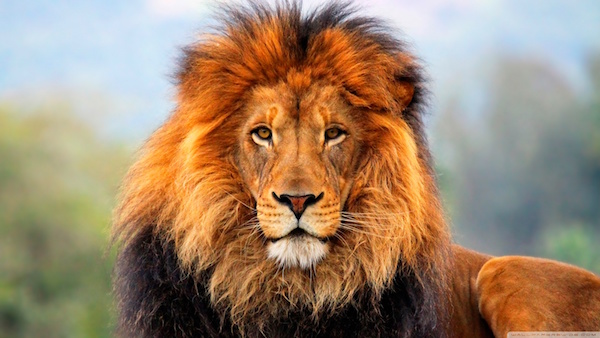
LION
The lion is a well-muscled cat with a long body, large head, and short legs. Size and appearance vary considerably between the sexes. The male’s outstanding characteristic is his mane, which varies between different individuals and populations. It may be entirely lacking; it may fringe the face; or it may be full and shaggy, covering the back of the head, neck, and shoulders and continuing onto the throat and chest to join a fringe along the belly. In some lions the mane and fringe are very dark, almost black, giving the cat a majestic appearance. Manes make males look larger and may serve to intimidate rivals or impress prospective mates.
A full-grown male is about 1.8–2.1 metres (6–7 feet) long, excluding the 1-metre tail; he stands about 1.2 metres high at the shoulder and weighs 170–230 kg (370–500 pounds). The female, or lioness, is smaller, with a body length of 1.5 metres, a shoulder height of 0.9–1.1 metres, and a weight of 120–180 kg. The lion’s coat is short and varies in colour from buff yellow, orange-brown, or silvery gray to dark brown, with a tuft on the tail tip that is usually darker than the rest of the coat.A full-grown male is about 1.8–2.1 metres (6–7 feet) long, excluding the 1-metre tail; he stands about 1.2 metres high at the shoulder and weighs 170–230 kg (370–500 pounds). The female, or lioness, is smaller, with a body length of 1.5 metres, a shoulder height of 0.9–1.1 metres, and a weight of 120–180 kg. The lion’s coat is short and varies in colour from buff yellow, orange-brown, or silvery gray to dark brown, with a tuft on the tail tip that is usually darker than the rest of the coat.
Lions prey on a large variety of animals ranging in size from rodents and baboons to Cape (or African) buffalo and hippopotamuses, but they predominantly hunt medium- to large-sized hoofed animals such as wildebeests, zebras, and antelopes. Prey preferences vary geographically as well as between neighbouring prides. Lions are known to take elephants and giraffes, but only if the individual is young or especially sick. They readily eat any meat they can find, including carrion and fresh kills that they scavenge or forcefully steal from hyenas, cheetahs, or wild dogs. Lionesses living in open savanna do most of the hunting, whereas males typically appropriate their meals from the female’s kills. However, male lions are also adept hunters, and in some areas they hunt frequently. Pride males in scrub or wooded habitat spend less time with the females and hunt most of their own meals. Nomadic males must always secure their own food.
Though a group of hunting lions is potentially nature’s most formidable predatory force on land, a high proportion of their hunts fail. The cats pay no attention to the wind’s direction (which can carry their scent to their prey), and they tire after running short distances. Typically, they stalk prey from nearby cover and then burst forth to run it down in a short, rapid rush. After leaping on the prey, the lion lunges at its neck and bites until the animal has been strangled. Other members of the pride quickly crowd around to feed on the kill, usually fighting for access. Hunts are sometimes conducted in groups, with members of a pride encircling a herd or approaching it from opposite directions, then closing in for a kill in the resulting panic. The cats typically gorge themselves and then rest for several days in its vicinity. An adult male can consume more than 34 kg (75 pounds) of meat at a single meal and rest for a week before resuming the hunt. If prey is abundant, both sexes typically spend 21 to 22 hours a day resting, sleeping, or sitting and hunt for only 2 or 3 hours a day.
WHERE WILL YOU FIND THEM
You will find the elephants at pen E27, close to the amphitheatre.