
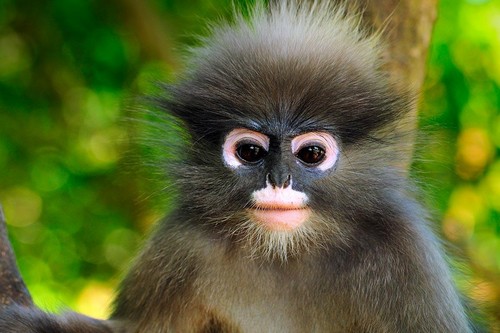
MONKEY
Monkeys are a large and diverse mammal group that includes most primates. Humans, chimpanzees (Pan troglodytes) and other apes share an ancestor with monkeys but belong to a separate group of primates that diverged from monkeys millions of years ago. Monkeys are typically smaller than apes and usually have tails, which apes lack. The monkey group doesn't include lemurs, which are another branch of the primate family tree and live in Madagascar.
There are a variety of monkeys, spread across the world, with very different lifestyles. They come in many shapes, sizes and colors, but they are all intelligent and social creatures.Monkeys are famous for eating bananas, but their diet varies considerably across species, depending on where they live and which foods are available. For example, saki monkeys may eat up to 50 fruit species in a single day, BBC News reported in 2013.
Most monkeys are omnivores; they eat plant-based foods, such as fruits and nuts, as well as some meat, such as lizards and bird eggs. Monkey diets can shift with changing seasons. For example, proboscis monkeys mostly eat fruit when it is ripe, from January to May, and eat more leaves from June to December, according to the Wisconsin National Primate Research Center.
Some species have more specialized diets. Species of colobus monkeys mainly eat leaves and have complex stomachs so they can digest toxic foliage that other monkeys can't, according to the African Wildlife Foundation, a nonprofit that focuses on conserving wildlife in Africa. A panda's 6th "finger" is like a human thumb. It has the same function as a thumb, but it is actually an unusual wrist bone or opposable paw heel with strong muscles but no movable joints, which allows it to grasp food. They can press the bamboo into fat cigar shapes with their 6th digits for efficient eating.
WHERE WILL YOU FIND THEM
You will find the elephants at pen E29, close to the amphitheatre.